
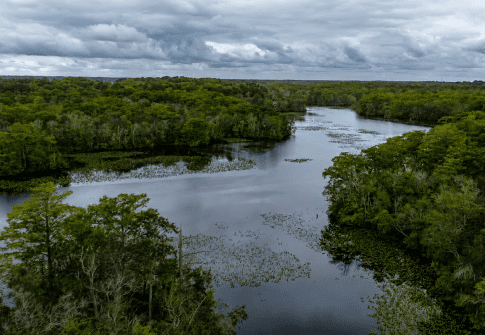
While everyone heads west for the mountains, the bald cypress along Maryland's Pocomoke River turn bronze and rusty orange from late October into mid November, and the best seat in the house is a kayak on the dark water at first light.
Every fall, half of Maryland points the car west. Toward the mountains, the maples, and the bumper to bumper traffic on the way to a crowded overlook.
Hardly anyone points the car the other way, but they should. Some of the best fall colors in the state are here on the Eastern Shore, and you can see them from the seat of a kayak, instead of a parking lot.
It's the Pocomoke River. Dark, glassy, tea-colored water winding the entire length of Worcester County, lined with old cypress forest. The color it turns in autumn is a different animal from the mountains. Lower to the water, quieter, and doubled in the reflection.
It's All About the Cypress
What makes the Pocomoke different comes down to one tree. The bald cypress.
This is the northernmost bald cypress swamp in the country, and here's the part most people don't expect: these aren't evergreens. They're deciduous conifers, meaning they drop their needles every year. But not before they change color first.
Starting in late October, those feathery green needles turn a deep bronze. By the first or second week of November, they go full rusty orange, right around peak. And because the Pocomoke runs so dark, the water works like a mirror. The orange isn't just overhead in the canopy. It's spread across the surface, right under your paddle, so you're sitting inside the color instead of looking up at it.
When to Go
The coast hangs onto its warm air a little longer than the rest of the state, so fall runs late here. While the mountains peak in early October, the Pocomoke is just getting going.
Aim for late October through mid November, with the first half of November usually hitting peak.
And go early. First thing in the morning, when the cool air settles over the warmer water, a low mist hangs right on the surface. The sun comes up through the orange, lights up the fog, and for about an hour, the river is as good as it gets all year. It’s worth the early alarm, every single time.
Two Ways to Paddle It
If you're new to this, the Pocomoke is a forgiving place to learn. The water is flat, with a slow, gentle current, so on a calm morning it's about as easy as it gets. One thing every local will tell you is to mind the wind and the tide. The open main stem can turn choppy when it's breezy, and the tidal flow has a say too. So pick a still morning and lean toward the sheltered creek. Here are the two routes worth your time.
Snow Hill to Milburn Landing. Put in at the public ramp in historic Snow Hill and work your way down toward the Milburn Landing side of Pocomoke River State Park. This stretch feels genuinely wild. The river narrows to about fifty feet in places, cypress knees push up through the surface, and most of the time, it's just you out there.
The Corkers Creek Loop at Shad Landing. Over on the Shad Landing side of the state park, Corkers Creek is a marked water trail, a self-guided loop of just under two miles through swamp forest. The creek gets so tight that the color closes in overhead, and you're paddling through a real tunnel of orange. It's quiet, protected from the wind, and is where a nervous beginner should start. Grab the trail guide at the park, it walks you through the swamp as you go.
Either way, keep your eyes up and down. Turtles stack on every fallen log, herons work the shallows, wood ducks bust out of the cypress, and if you're lucky, an otter slips by. Fall is migration season too, so this whole corridor, an Audubon-recognized Important Bird Area, fills with warblers, vireos, and raptors heading south, with bald eagles overhead year round.
Don't Have a Kayak?
No problem. Right on the water in downtown Snow Hill, the Pocomoke River Canoe Company rents canoes, kayaks, and paddleboards, and they'll shuttle you upriver so you can paddle the prettiest stretch back to town. One thing to plan around: in the off season they run on weekends and by appointment, and they rent through late fall, so call ahead before you make the drive.
Rather keep your feet dry? You can still get right into the canopy. Pocomoke River State Park has miles of trails, including raised boardwalks that carry you out over the wetlands to the base of the giant cypress. And if you want the water without the crowd, the quiet Mattaponi soft launch in the Pocomoke State Forest is a local favorite.
If you'd rather plan it like a local, Laura Scharle of Delmarva Trails & Waterways is the one to know. She has mapped water trails all over the peninsula and is paddling the full 650 miles of Delmarva's shoreline herself, so her site is the best place to scout launches and check conditions before you head out.
Make a Day of It
The river is the reason you came, but the towns on either end are worth your time too.
Dry off and walk Snow Hill. Brick sidewalks, a hot coffee or a pastry from one of the local spots, a couple of artisan galleries, and some of the best preserved Victorian houses on the shore.
A few minutes downstream, Pocomoke City has a riverside boardwalk and the Delmarva Discovery Museum, ten thousand square feet on the history, ecology, and wildlife of the Pocomoke River basin. And yes, that includes the live river otters. Their names are Mac and Tuck, and they pretty much run the place.
The Pocomoke is one of only nine rivers in Maryland protected as Wild and Scenic. Spend one still morning under that canopy, and you'll get why.
So this fall, let everyone else sit in the mountain traffic. The best color in the state might be the quiet copper river an hour from the beach, and you'll have most of it to yourself.
Modal title